Meta Ads, Engineered for Revenue

Continuous Improvement, Engineered
- Phase One: Day 1-7
- Phase Two: Day 8 -14
- Phase Three: Day 21 Onwards

Ad Performance Analysis
Optimize Facebook advertising ad sets to target ideal customers, reduce invalid clicks, lower costs, and boost overall social media marketing performance.
1. Refine audience targeting: Tailor groups by product strengths; exclude low-quality audiences to improve relevance.
2. Optimize timing & placement: Leverage early exposure data to focus on peak hours, lowering Facebook ads price and increasing impressions.
3. Adjust ad creatives: Run A/B tests with benefit-focused visuals, emojis, and clear calls-to-action to drive clicks.
User Engagement Analysis
As a Facebook ads agency, we reduce interaction barriers to boost likes, comments and follows, enhancing engagement.
1. Enhance call-to-action: Use prompts like “Like and save for exclusive perks” to boost Facebook ads services performence.
2. Incentivize basic interaction: Offer low-barrier rewards to lift engagement for long-term Facebook advertising success.
User Enquiry Analysis
For Facebook ads services performance,we increase user enquiries and lead generation by simplifying processes and improving response efficiency.
1. Simplify Meta lead forms: Trim form fields to essentials, streamlining submissions and boosting conversion with our social media marketing service.
2. Auto-reply templates: Set up custom templates for common queries and after-hours messages, reducing drop-offs.
3. Standardise team response: As your reliable Facebook ads agency, we equip staff with guidelines to handle complex questions and capture quality leads from Facebook marketing ads.
Sales Conversion Analysis
Drive conversions effectiveness by building trust, creating urgency, and improving data tracking within Facebook advertising.
1. Strengthen trust and urgency: Share customer feedback and case studies; launch short-term promotions to accelerate Facebook for business conversions.
2. Improve conversion tracking: Build lookalike audiences, update Leadbox CRM regularly to close the data loop for better Facebook ads performance.
Ad Performance Analysis
Expand social coverage to boost brand exposure through Facebook advertising. Refine targeting and creatives to engage high-intent users and optimize costs.
1. Broaden Reach: Extend coverage with Instagram Stories/Reels and lookalike audiences via our social media marketing solutions.
2. Update Creatives: Revise low-CTR headlines, use dynamic visuals and differentiate messaging to strenthen advertising effect on Facebook for business.
3. Refine Targeting: Replace weak interest tags with precise ones to drive premium traffic and stabilise overall Facebook ads price efficiency.
User Engagement Analysis
As a social media marketing agency, we optimise content strategy to filter casual users and lock in core prospects for Facebook advertising.
1. Elevate content value: Share industry content and discussion topics to drive meaningful interactions on Facebook for business social media.
2. Add interactive elements: Design mini-game with small rewards to boost follows, shares and in-depth engagement.
3. Segment high-value users: Tag and classify active audiences in Meta Ads Manager, then launch retargeting ads to lift long-term retention.
User Enquiry Analysis
Address vague and irrelevant queries by refining prompts, streamlining processes, and using data to improve lead quality, maximizing the social media marketing performance.
1. Improve inquiry guidance: Deploy structured auto-replies with screening questions to clarify demand and purify lead sources.
2. Streamline the process: With our experienced Facebook ads team, we provide clear instructions to lower inquiry barriers and accelerate conversions.
3. Optimize lead-capture language: Refine communication scripts by analyzing past high-converting chats to capture key details.
Sales Conversion Analysis
We standardise sales workflows and leverage Meta interactive features to reduce buyer hesitation. ROAS-based budget allocation builds a steady growth loop and boosts advertising revenue on Facebook for business.
1. Standardize Sales & Support: Adopt unified proposals and team training to respond promptly to comments and DMs, resolve doubts and reduce lead drop-offs.
2. Optimize Budget & Creatives: Allocate spend by ROAS, cut low-performing content, highlight key selling points, and scale top creatives to stabilise Facebook ads price.
Ad Performance Analysis
As a Facebook ads company, we use retargeting to expand brand reach. Optimize creatives to boost exposure and drive cost-effective, high-intent clicks.
1. Re-engage via Retargeting: Reconnect with non-converting visitors through precise follow-up campaigns, a core part of our face book advertising services.
2. Update Creatives & Leverage Trends: Refresh low-performing posts, integrate trending elements and limited offers to seize peak traffic and control overall Facebook ads price.
User Engagement Analysis
As a reliable social media marketing partner, we host interactive events and share valuable content to reduce user churn, sustaining high engagement throughout the funnel.
Engagement Maintenance: Regularly host interactive events (e.g., check-ins, prize draws) and share valuable content to reduce churn and ensure sustained high engagement.
User Enquiry Analysis
Optimize inquiry workflows with retargeting and lost lead reviews. Our Facebook ads company refines key stages to capture quality leads via tailored Facebook ads services.
1. Retarget for Conversion: Deliver customized ads to engaged non-inquiry users, guiding them to complete enquiries.
2. Review Lost Leads: Analyze users who dropped off post-inquiry to refine customer reception manual, increasing lead retention.
Sales Conversion Analysis
Leverage Meta social credibility to build trust and brand differentiation. We allocate your social media marketing spend toward lookalike audiences of closed deals, maximizing the efficiency of your Facebook ads price budget.
1.Enhance Trust and Address Risk: Showcase success stories and after-sales guarantees to ease concerns and win more clients.
2.Core Client Management: Create exclusive groups for signed clients, sharing updates and benefits to encourage renewals and referrals.
META Ads Campaigns
- Lead Ads (In-App Lead Form)
- Click to Message Ads
- Single Image Ads
- Video Ads
- Carousel Ads
- Collection Ads
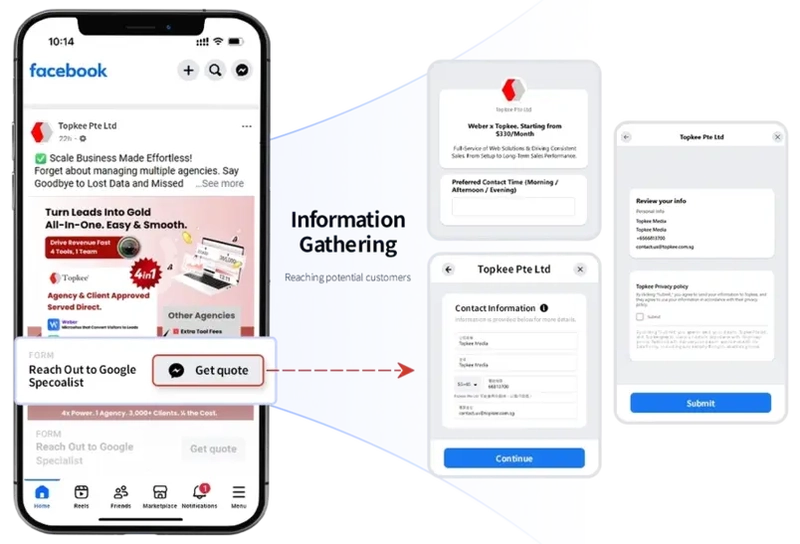
Meta Lead Ads let businesses collect user information directly within Facebook or Instagram via pre-filled forms, seamlessly driving leads without leaving the app.
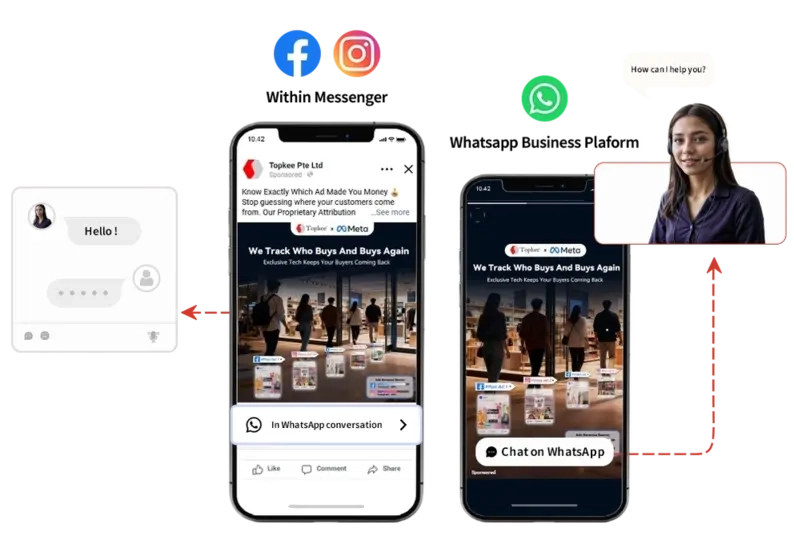
Start instant chats to enable personal engagement that drives enquiries and conversions on WhatsApp / Instagram / Facebook for business.
High-impact single-image ads grab instant attention, ideal for brand building and product promotion. Choose Topkee as your fb advertising agency to craft suitable, attractive images for better campaign performance.
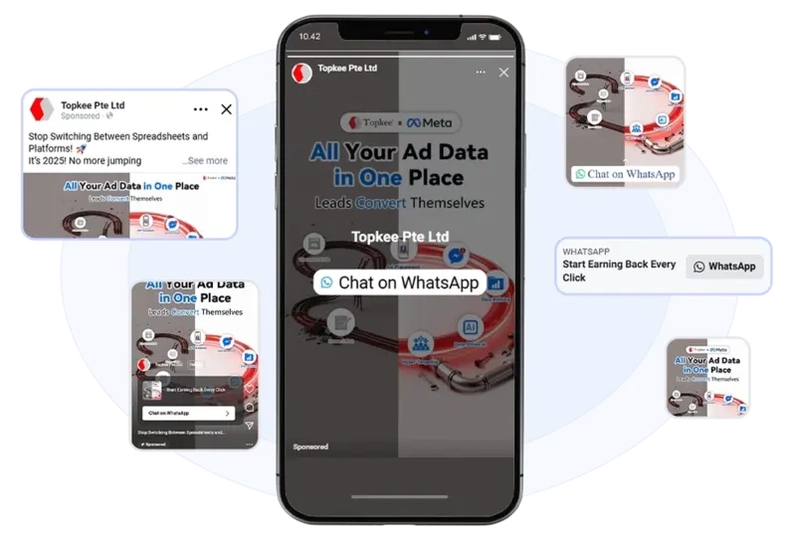
Create high-impact Stories ads that resonate with audiences, help them instantly remember your services and products, push them closer to purchase — all delivered by Topkee, your professional Facebook ads company.
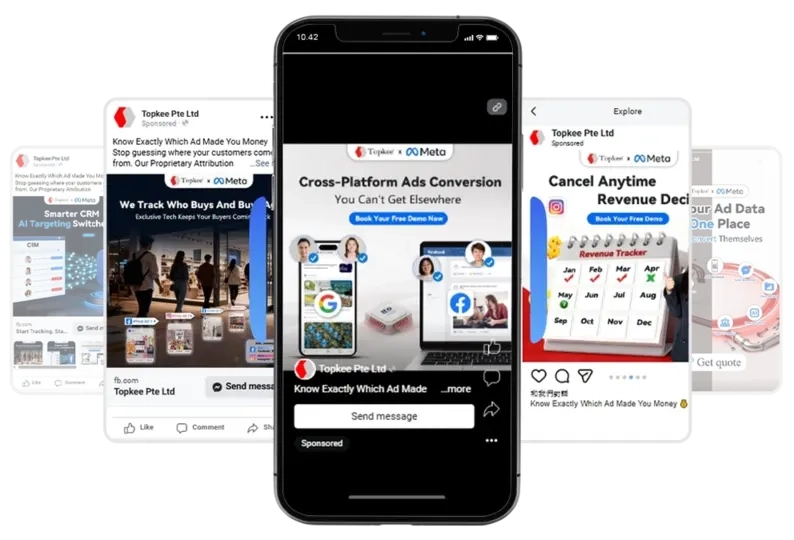
Showcase multiple products or features in a single swipeable ad, each with its own link, perfect for catalogs, comparisons, and guiding users through a step-by-step journey.
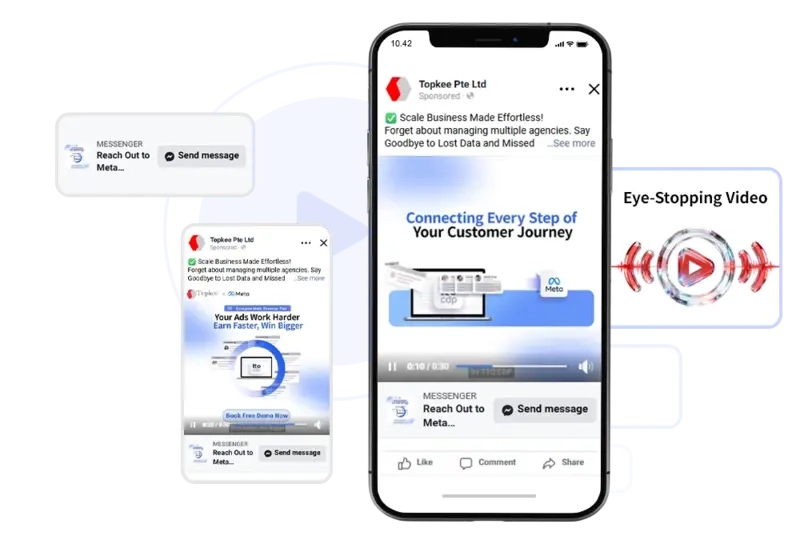
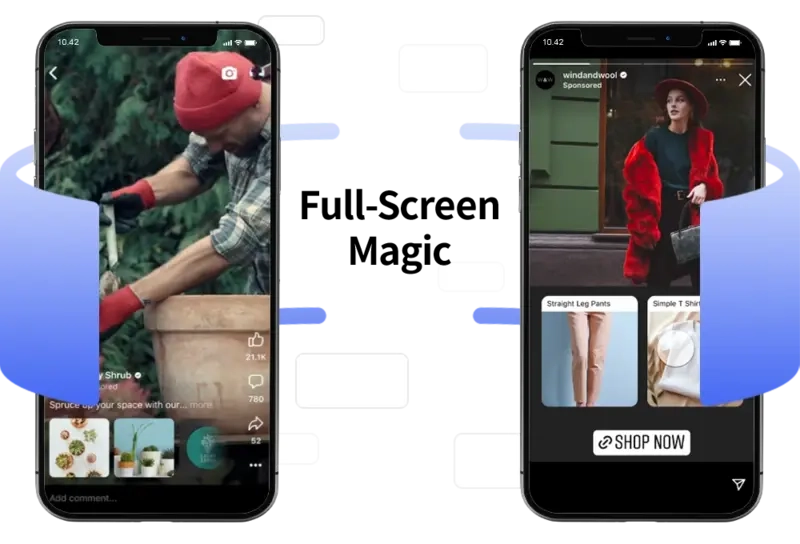
Immersive full-screen ads combine images and videos for vivid storytelling, a premium Meta advertising solution to guide users toward conversion effectively. Topkee serves as your trusted facebook ads company, delivering polished images and videos for business campaigns.
Built-In Social Media Marketing Ecosystem
Unified Data Layer

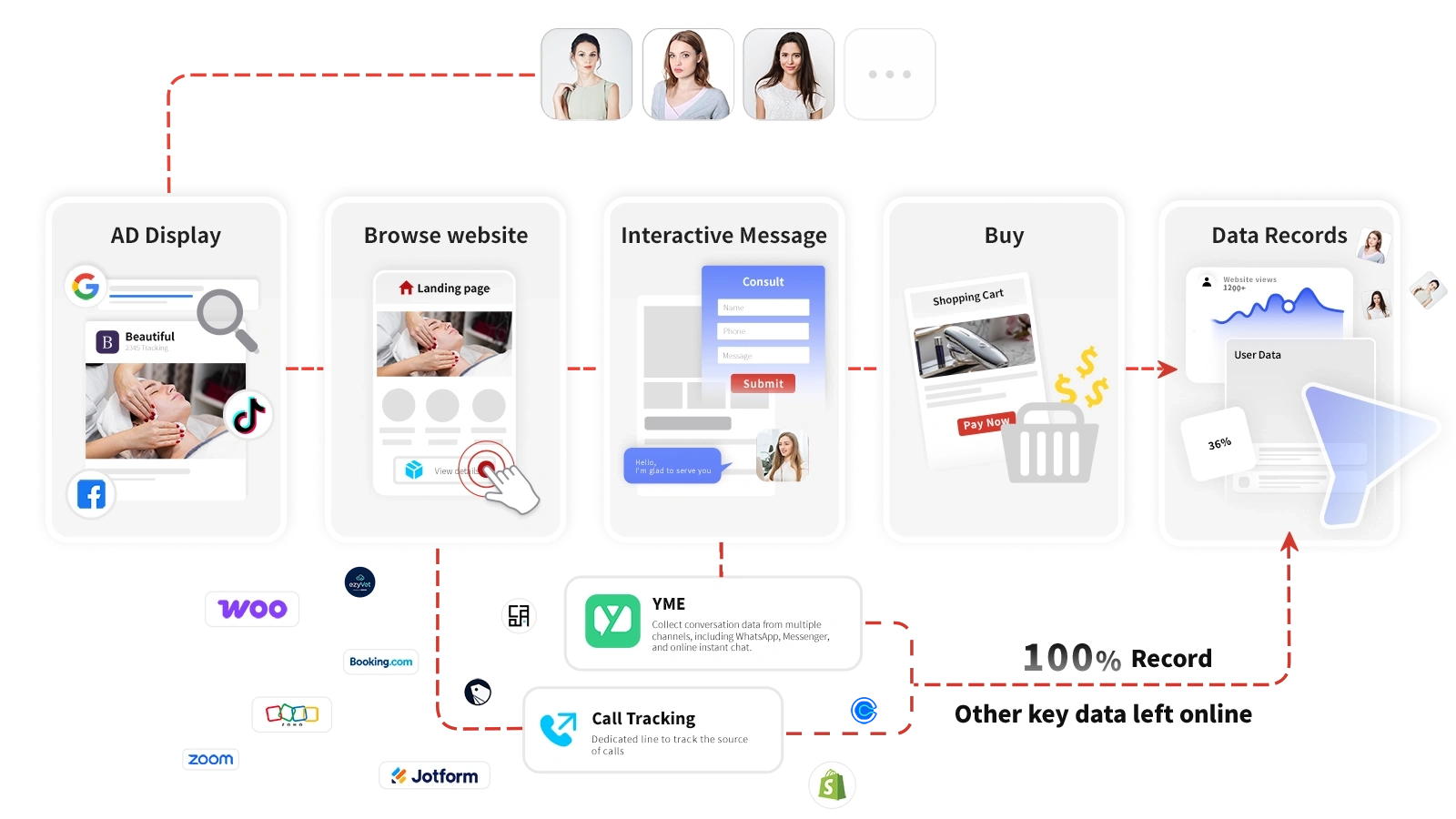
Every user is assigned a unique TTCLID, connecting Meta ads marketing interactions across channels, devices, and touchpoints.
This creates a single source of truth, enabling precise attribution, deeper customer understanding, and optimisation based on real revenue signals.
Performance Control System

We translate complex marketing and sales data into clear, actionable insights, tracking performance from click to conversion to revenue.
This enables real-time optimisation, accurate ROAS measurement, and full visibility into what drives social media marketing results.


YME centralises all customer conversations across WhatsApp, Messenger, and Live Chat into a single, structured system.
AI and human teams work together to respond faster, qualify leads in real time, and guide conversations toward conversion, ensuring no enquiry is lost.

Leadbox centralises your entire sales pipeline from lead capture to closed revenue.
Every interaction, status update, and conversion signal is tracked in one system, enabling teams to prioritise high-value opportunities, reduce drop-offs, and improve close rates with data-backed decisions.
Built for Speed

Weber enables rapid deployment of high-performance landing pages, designed specifically for paid traffic.
Every page is optimised for speed, clarity, and conversion, while seamlessly connected to tracking systems to capture user behaviour and feed real data back into optimisation.

System Architecture Layer

Through custom development and API integrations, we unify your platforms from ads and landing pages to CRM and analytics into a single, connected ecosystem.
This eliminates data silos, enables seamless automation, and ensures every signal flows into a central system to drive social media marketing optimisation and control.
Data, Unified. Insights, Actionable.

Powered by TTO CDP
TTO CDP unifies your data across platforms, giving you full visibility, accurate attribution, and real-time control over performance.
 Talk to an Expert
Smart Lead Capture That Qualifies Before You Sell
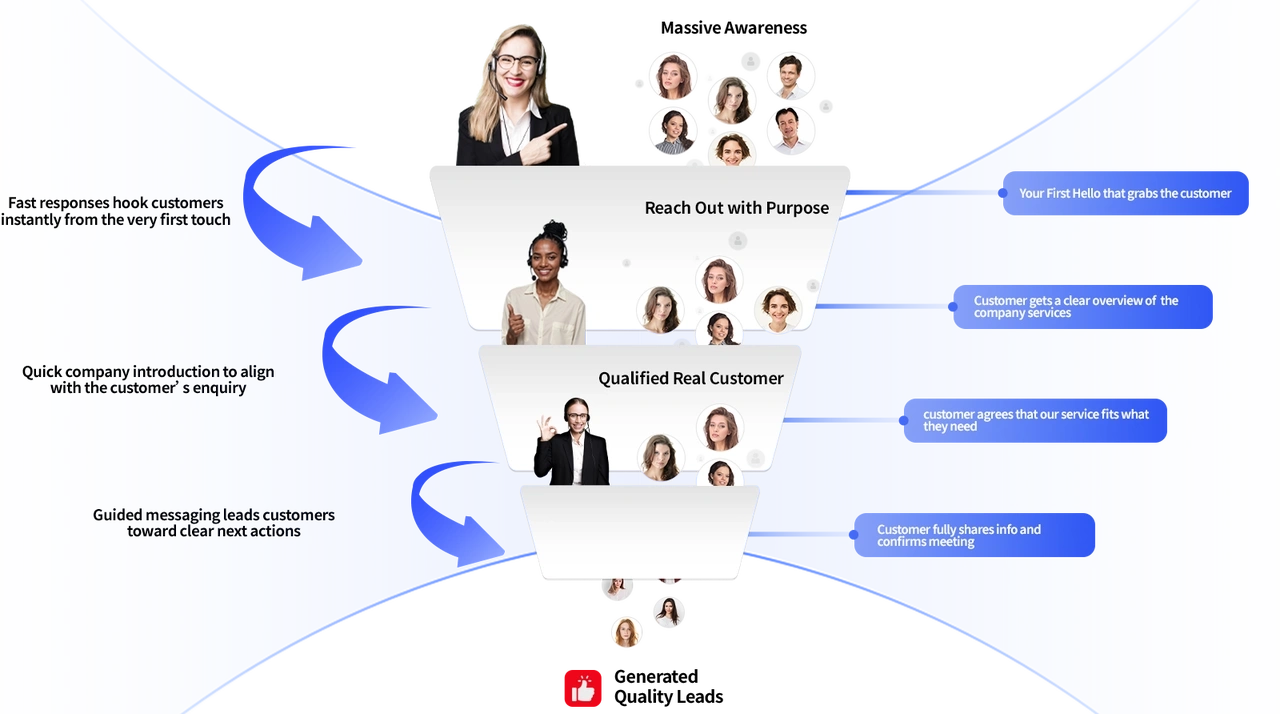
Smarter Funnels, More Sales.
It’s That Simple
We design and optimise full-funnel systems that connect marketing, sales, and data. Enabling continuous improvement and predictable growth.
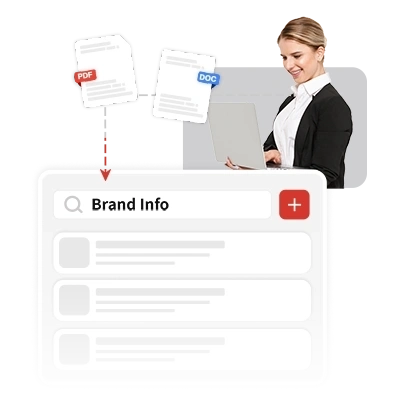
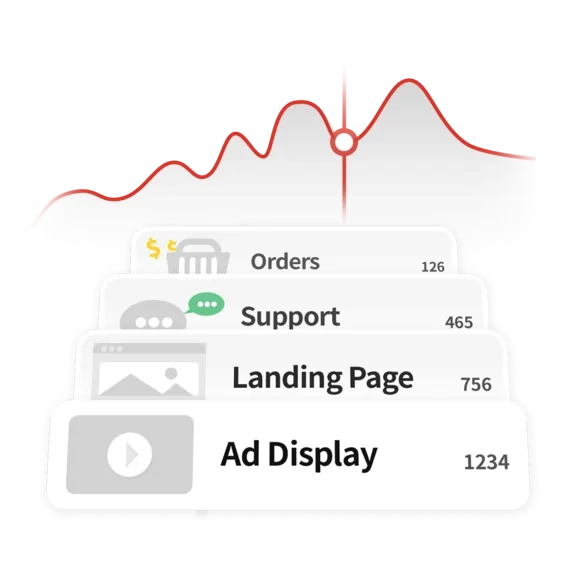
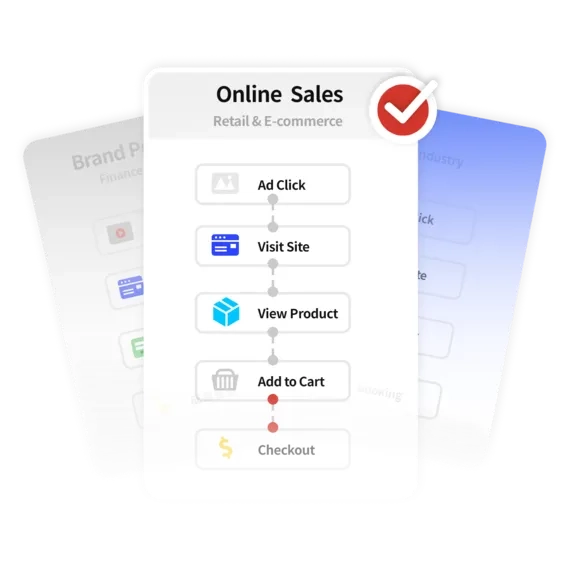
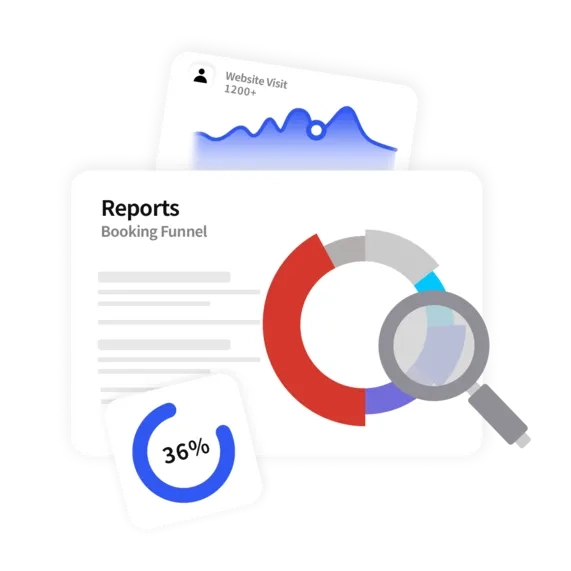
Connect Every Touchpoint.
Capture Every Social Media Marketing Revenue.
Eliminate blind spots in Facebook advertising and gain full visibility from first click to final revenue.
 Connect with Our Team
Creativity That Performs. Not Just Looks Good.
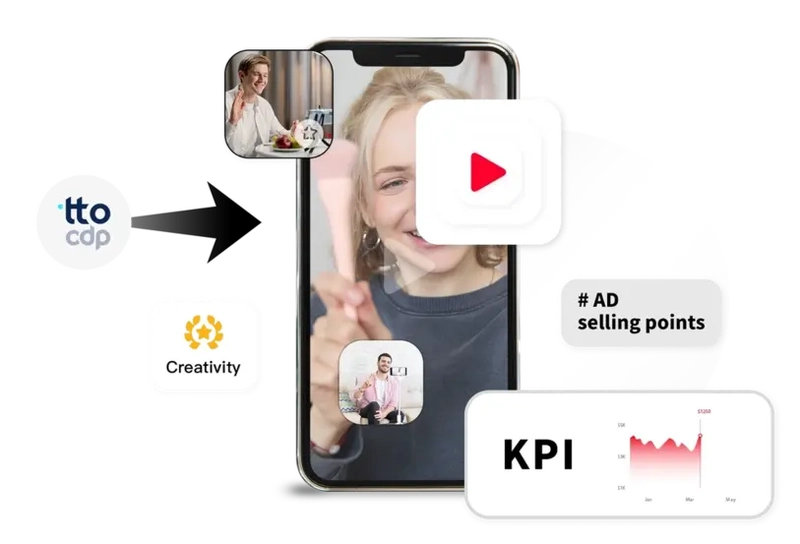
We produce, test, and refine high-performing creatives that directly impact social media marketing conversion and revenue.
- High-Impact Selling Points
Our AI engine identifies what truly drives conversions, combining data, audience signals, and proven frameworks to generate creatives built for social media marketing performance, not just visuals.
- Performance Optimisation
Every creative is continuously measured against real KPIs.
We optimise based on actual funnel performance, improving engagement, conversion rates, and overall ROAS over time.
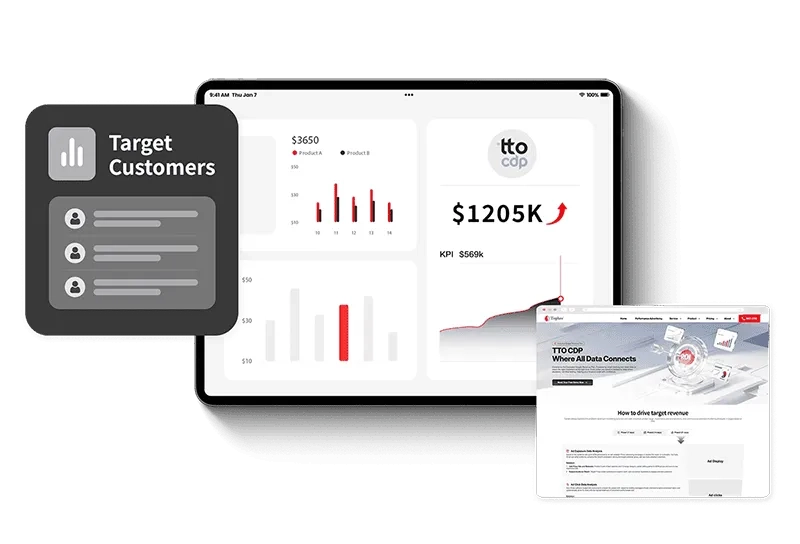
Social Engagement That Drives Real Intent

Built to Deliver Real Business Outcomes
Our system adapts to your business model connecting strategy, execution, and results across every stage of growth.
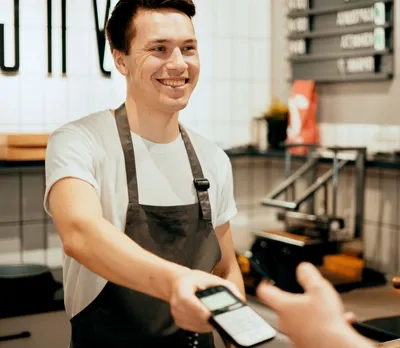
Online to Offline (O2O)
Store Sales
Convert online demand into real-world sales.
Drive store visits, track offline conversions, and connect every interaction back to measurable revenue.

Online Leads to Offline Sales
Capture, qualify, and convert leads with a structured follow-up system. Ensure every enquiry is tracked, managed, and optimised to maximise conversion into revenue.
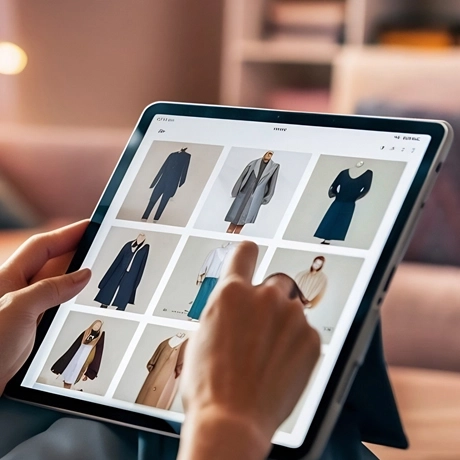
Online Sales Conversion
Optimise every step of the buying journey from click to checkout. Improve conversion rates, reduce drop-offs, and scale revenue through a seamless purchase experience.
Real Business Results. Not Just Marketing Metrics.
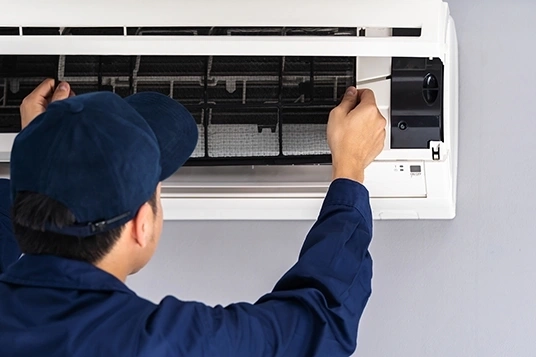
In just one month, this new AC brand blew past 2000% ROAS with META Ads the results were insane. Our targeting locked onto the right people fast: customers who urgently needed AC cleaning, servicing, and installation.
A small ad spend suddenly turned into a flood of real, trackable revenue.
With clear data and a smooth funnel, enquiries didn’t just come in.They turned into confirmed jobs quickly, giving the business a huge push in growth.

The client's previous agency couldn't connect online ads to offline sales. After our optimization, revenue rose from $50,000 to $100,000 in the first month. We bridged the gap by visiting the furniture store, developing an appointment booking model, and enabling full ad-to-revenue tracking. In the second month, the client added Google Ads and entered a long-term partnership with Topkee.


Meta Ads Plans Built to Scale with Confidence.
Lead Generation
Lead Generation
Lead Generation
Lead Generation